Product

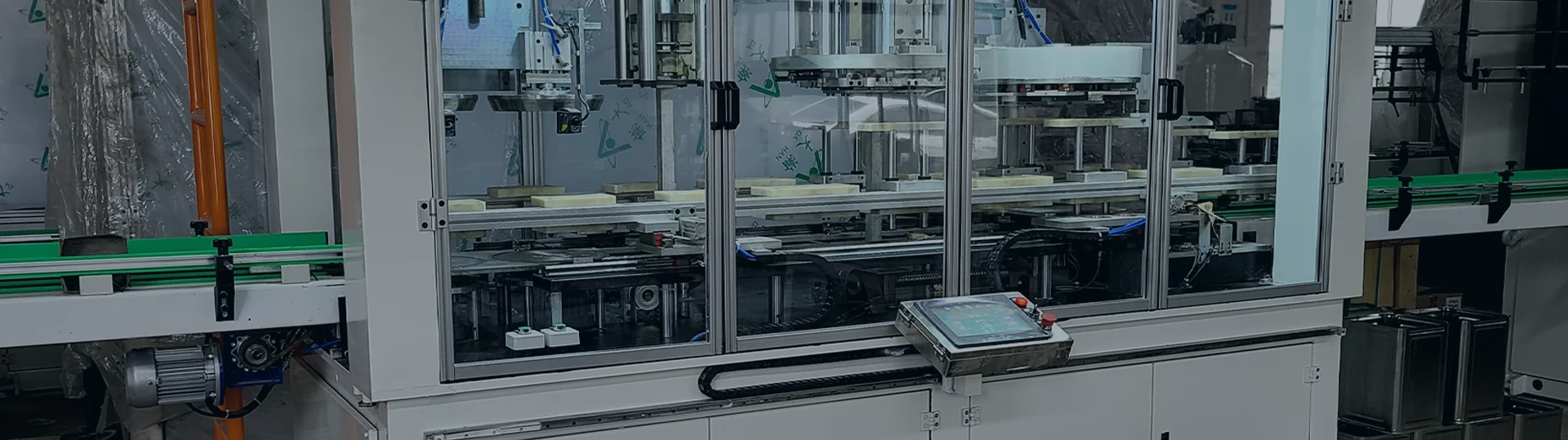
Semi-Automatic Metal Bucket and Tin Can Packaging Line 65-290mm Dia 60-420mm H 20-50 cans/min
Product Details
Product Overview
- The Semi-Automatic Metal Bucket and Tin Can Packaging Line is designed for medium-volume manufacturers who require reliable production of metal containers with diameters between 65 mm and 290 mm and heights between 60 mm and 420 mm.
- Throughput: 20–50 cans/min (actual speed varies with can size, seam type, filling method, and operator skill).
- Typical industries: paints and coatings, lubricants, adhesives, chemicals, food oils, and aerosol-free metal packaging.
Key Features
- Size Flexibility: Fast-change tooling and adjustable guides accommodate a wide diameter and height range without major modifications.
- Modular Design: Core modules can be reconfigured or expanded—seamer, top cap feeder, positioning table, labeling station, and stacker.
- Robust Construction: Food-grade or industrial stainless steel contact parts; corrosion-resistant finishes for harsh environments.
- User Interface: PLC control with touchscreen HMI for recipe storage (settings per can size) and simple troubleshooting prompts.
- Safety & Compliance: Emergency stops, safety guards, and interlocks. Designed to meet CE and relevant regional safety standards upon request.
- Low Maintenance: Easy-access bearings, quick-change sealing elements, and diagnostic indicators reduce downtime.
Standard Components and Functions
Feeding & Positioning Table
- Manual or semi-automatic can loading, servo or motor-driven indexing table.
- Adjustable clamps and centering devices to handle various diameters.
Seaming/Top/Bottom Processing Unit
- Precision seaming head for reliable double-seam integrity on tinplate or lacquered substrates.
- Adjustable seaming parameters to match material thickness and seam profile.
Filling Preparation & Transfer
- Infeed conveyor and transfer arms stage cans for filling or lid application (line can be integrated with a separate filling machine).
- Optional magnetic or vacuum hold-down to stabilize lightweight or empty cans.
Labeling Station (Optional)
- Wrap-around or front/rear labeling modules compatible with pressure-sensitive or shrink labels.
- Encoder synchronization for accurate placement at high speeds.
Stacking and Packing
- Mechanical or pneumatic stacking into pallets, trays, or conveyors for secondary packing.
- Accumulation buffer to decouple upstream and downstream operations.
Electrical & Control System
- PLC-based control with touchscreen HMI, recipe management, and fault logging.
- Standard industrial sensors, photoeyes, and safety circuits.
Technical Specifications (Representative)
- Diameter range: 65–290 mm
- Height range: 60–420 mm
- Speed: 20–50 cans/min (dependent on format and configuration)
- Power supply: 380V/50Hz (customizable)
- Air consumption: specified based on optional pneumatic modules
- Materials: SUS304/SUS316 stainless steel contact surfaces, carbon steel frame with powder coating
- Machine footprint: depends on module set; typical semi-automatic line requires 6–15 m2
Installation and Site Requirements
- Foundation: level concrete floor with anti-vibration pads recommended.
- Space: allow clearance for operator access, maintenance, and infeed/outfeed conveyors.
- Utilities: electrical supply, compressed air (dry, oil-free), and optional vacuum or inert gas lines depending on product.
- Environmental: indoor environment free of extreme dust and corrosive fumes; ventilation recommended for solvent-based products.
Operation Workflow
- Configure machine recipe on HMI for selected can size and seam parameters.
- Load tooling and adjust guide rails and clamps for diameter and height.
- Feed empty cans to the positioning table manually or with a hopper.
- Transfer cans to seaming station; perform seaming and any required lid application or crimping.
- Move cans to labeling and stacking stations; collect finished units for packaging.
- Monitor sensors and HMI for alarms; stop line for jams or defective cans.
Maintenance and Spare Parts
- Daily: clean contact surfaces, check alignment, and inspect seals and o-rings.
- Weekly: lubricate bearings, check conveyor belts and chains, verify sensor alignment.
- Monthly: inspect seaming rollers, fasteners, and motor coupling; tighten and replace wear parts as needed.
- Recommended spare parts: seaming rollers, gaskets, bearings, belts, photoeyes, and PLC fuses.
Safety Guidelines
- Train operators on emergency stop procedures and lockout/tagout before maintenance.
- Ensure all guards and interlocks are engaged during operation.
- For hazardous products, provide appropriate ventilation and PPE for operators.
- Follow local electrical and safety codes for machine installation.
Optional Upgrades and Accessories
- Automatic can unloader and palletizer
- Integrated filling machine (piston, pump, or gravity fillers) for liquid products
- In-line inspection systems (leak test, seam inspection, label inspection)
- Inkjet or laser coder for date/lot coding
- Explosion-proof electrical components for solvent-based product lines
- Remote monitoring and IoT connectivity for production metrics
Packaging and Delivery
- Machines are typically disassembled for shipping and packed with protective covers and corrosion inhibitors.
- Installation and commissioning can be provided by factory-trained technicians.
- Lead time varies with customization level; standard module delivery often within 6–10 weeks, customized lines quoted separately.
After-Sales Support
- Training for operators and maintenance staff during commissioning.
- Technical documentation including operation manual, spare parts list, electrical schematics, and maintenance schedule.
- Warranty terms and optional extended maintenance contracts available.
- Remote technical support and on-site service options.
Ordering Information
- Provide required can dimensions (diameter, height, material), target speed, product type (viscosity, solvent), and desired modules (labeler, filler, coder).
- Request a line layout and quotation including installation, commissioning, and training services.
This semi-automatic packaging line delivers a balance of flexibility, reliability, and cost-efficiency for manufacturers transitioning from manual methods to higher throughput while retaining ease of operation and maintenance.
Production line
Address: No.5 Antai Road,Automobile Industry Development Zone,Jiujiang City,China. 332000
Tel:86-792-8326978
Mobile:8618970289827
Email: liyingquan@126.com